For Australian business owners, understanding the distinct roles of a financial adviser and an accountant is important for effective financial management and strategic growth. While both professionals deal with money, their core functions, regulatory frameworks, and the types of advice they provide differ significantly, impacting how they can support your business’s unique needs.
This article will clarify the primary distinctions between a financial adviser vs accountant for business owners, outlining their respective strengths, areas of expertise, and when each professional is the better choice. We will also explore scenarios where collaborating with both can provide a comprehensive approach to optimising business finances and achieving long-term objectives.
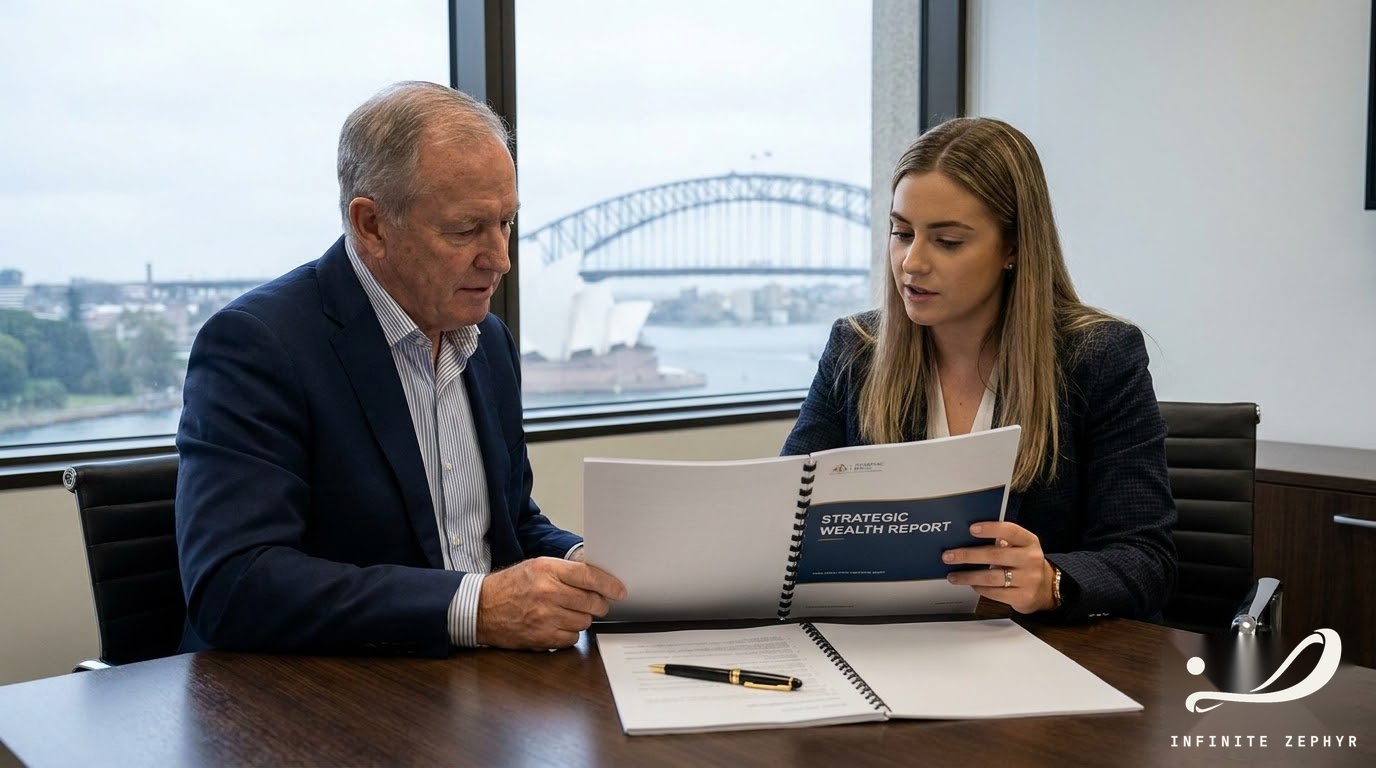
Financial Adviser vs Accountant for Business Owners: At a Glance
The fundamental difference between a financial adviser and an accountant for business owners lies in their primary focus and regulatory scope. An accountant typically concentrates on historical financial data, compliance, and tax obligations, so your business meets Australian Taxation Office (ATO) requirements and maintains accurate financial records. Their expertise is rooted in reporting past performance and managing current tax liabilities, which is essential for maintaining regulatory compliance.
Conversely, a financial adviser focuses on future-oriented financial strategy, wealth creation, and risk management. They provide guidance on investment strategy, superannuation, retirement planning, and how to structure your finances to achieve specific business and personal goals. Financial advisers are regulated by the Australian Securities and Investments Commission (ASIC) and must be listed on the ASIC Financial Advisers Register to provide personal financial advice. This forward-looking perspective matters for sustainable business growth and long-term financial security.
Here’s a quick comparison of their typical roles:
| Feature | Accountant | Financial Adviser |
|---|---|---|
| Primary Focus | Historical data, compliance, tax | Future strategy, wealth creation, risk management |
| Key Services | Tax returns, BAS, bookkeeping, financial statements, audit, operational cash flow management | Investment advice, superannuation, retirement planning, insurance, debt management, estate planning, business financial planning |
| Regulatory Body | Tax Practitioners Board (TPB) for tax agents | Australian Securities and Investments Commission (ASIC) |
| Licensing | Registered Tax Agent (for tax advice) | Australian Financial Services (AFS) Licence holder or Authorised Representative |
| Scope of Advice | Tax, accounting, business structure (from a tax perspective) | Investments, superannuation, insurance, debt, whole-of-picture financial planning |
| Typical Fees | Hourly rates, fixed fees per service (e.g., tax return) | Percentage of assets under management, fixed fees, retainer fees |
While there can be some overlap, particularly in areas like business structure and cash flow management, their core competencies and the specific types of advice they are legally qualified to provide remain distinct. Understanding these differences is key for any business owner seeking professional financial guidance, especially when considering optimising business finances.

Read more: Sydney Financial Planner Comparison: Your 2026 Guide
Where an Accountant is the Better Choice
For many Australian businesses, an accountant is the foundational financial professional. Their expertise is indispensable for managing the day-to-day financial operations and keeping up with statutory obligations. An accountant excels in areas that require careful record-keeping, adherence to tax laws, and accurate financial reporting, forming the backbone of sound financial management.
Tax Compliance and Optimisation
An accountant is the go-to expert for all matters related to business tax. This includes preparing and lodging your business’s income tax returns, Business Activity Statements (BAS), and Fringe Benefits Tax (FBT) returns. They can help you navigate complex tax laws, identify eligible deductions, and structure your business in a tax-efficient manner. Their goal is to manage your tax liability within legal frameworks, so your business stays compliant with the ATO. They stay updated on legislative changes, which can significantly impact your business’s bottom line and help avoid costly errors or penalties.
Financial Reporting and Bookkeeping
Accurate financial statements are important for understanding your business’s performance and making informed decisions. Accountants prepare profit and loss statements, balance sheets, and cash flow statements. They can also oversee or manage your bookkeeping, so transactions are recorded correctly and categorised appropriately. This detailed reporting provides a clear picture of your business’s financial health, which is essential for securing loans, attracting investors, or simply monitoring progress against your business goals. They translate raw financial data into actionable insights, helping you understand where your money is going and coming from.
Cash Flow Management and Budgeting
While a financial adviser might look at strategic cash flow for investment, an accountant often provides practical, operational cash flow management advice. They can help you develop realistic budgets, forecast future cash flows based on historical data, and identify areas where expenses can be reduced or revenue increased. This focus on immediate liquidity and operational efficiency is important for the survival and stability of any business, particularly small to medium-sized enterprises (SMEs). They can implement systems to track receivables and payables, helping to prevent cash flow shortages before they occur.
Business Structure Advice (Tax Perspective)
When setting up or restructuring a business, an accountant can advise on the most tax-effective legal structure (e.g., sole trader, partnership, company, trust). Their recommendations will primarily consider tax implications, liability, and administrative burden. This initial structuring can have long-lasting effects on your business’s financial obligations and operational flexibility. They check that the chosen structure suits your business activities and your overall tax position, providing a solid foundation for future growth.
Tax laws are complex and subject to change. This information is a general summary only and should not be relied upon as formal tax advice.

Not sure how this applies to you?
Start with a complimentary Financial Health Check™ — a simple way to see where you stand before any advice is given.
Where a Financial Adviser is the Better Choice
While an accountant looks at the past and present financial health, a financial adviser is primarily focused on shaping your financial future. Their expertise extends beyond compliance to strategic wealth creation, risk mitigation, and achieving long-term financial goals for both your business and personal life. This makes them useful for business owners looking to grow their wealth and plan for the future, offering important financial guidance for SMEs.
Strategic Investment Planning
A key area where a financial adviser excels is in developing and implementing an investment strategy for your business’s surplus funds or your personal wealth. This might involve advising on suitable investment vehicles, asset allocation, and risk management tailored to your specific objectives and risk tolerance. They can help you make informed decisions about where to invest profits to generate further returns, rather than simply holding cash. This includes advice on diversified portfolios, property investments, or other growth assets, all designed to align with your business financial planning goals.
Superannuation and Retirement Planning
For business owners, superannuation can be complex, often intertwining personal and business finances. A financial adviser can provide comprehensive advice on optimising your superannuation contributions, managing Self-Managed Super Funds (SMSFs) if appropriate, and structuring your retirement savings. They help your retirement plans fit your overall financial strategy, considering both personal and business assets. It is important to note that running an SMSF requires significant time, responsibility, and ongoing compliance costs.
Risk Management and Insurance
Protecting your business and personal assets from unforeseen events is important. A financial adviser can assess your risk exposure and recommend appropriate insurance solutions, such as business interruption insurance, key person insurance, income protection, and life insurance. This proactive approach can help protect your financial stability against potential disruptions, so your business and family have cover in place should the unexpected occur. They help you understand the various types of coverage and tailor a plan that fits your specific needs.
Whole-of-picture business financial planning
Beyond specific products, a financial adviser offers a broader perspective on financial planning for business owners across Australia. They can help integrate your business’s financial goals with your personal financial aspirations, creating a cohesive strategy for wealth accumulation, debt management, and succession planning. Looking at the whole picture matters for business owners whose personal and business finances are often intertwined. For example, Infinite Zephyr offers financial planning services, including investment strategy and retirement planning, designed to support business owners across Australia.

When You Need Both, and How They Work Together
For many growing businesses, the question isn’t whether to choose a financial adviser or an accountant, but rather how to use the strengths of both. The most effective financial strategy often involves a collaborative approach, where these two professionals work in tandem to cover all aspects of your finances.
Complementary Expertise for Business Growth
An accountant provides the accurate financial data and tax insights that a financial adviser needs to formulate effective strategies. For example, an accountant can provide detailed cash flow projections and tax implications of a proposed business expansion. A financial adviser can then use this information to recommend investment strategies for funding that expansion, or advise on how to structure debt to minimise risk and maximise growth potential. Working together, they can ground strategic decisions in sound financial realities and compliance considerations.
Consider a scenario where a business owner wants to sell their business in five years. The accountant can check that financial records are accurate, assets are valued correctly, and the tax implications of the sale are understood. Simultaneously, the financial adviser can help plan how the proceeds from the sale will be invested for retirement, manage any capital gains tax implications from a wealth management perspective, and integrate these funds into a broader personal financial plan. This collaborative effort can support a smoother transition. (This is a general example only — actual outcomes depend on individual circumstances.)
Simplifying financial processes
When an accountant and a financial adviser communicate effectively, it can simplify your financial processes and help avoid potential issues. For instance, an accountant might identify a significant tax liability, prompting the financial adviser to explore superannuation contributions or other tax-effective investment strategies. Conversely, a financial adviser might recommend a change in business structure for investment purposes, which the accountant can then implement from a compliance and tax perspective. This integrated approach is particularly useful for small businesses shaping their financial strategy, where resources may be limited and efficiency matters.
This collaboration means tax is considered in investment decisions, and investment strategies fit the business’s operational realities. It creates a solid financial set-up where your business and personal wealth are managed together. For example, an accountant might flag a need for better cash flow management, leading a financial adviser to suggest specific investment products that offer liquidity while still generating returns. This integrated approach helps in optimising business finances for both short-term stability and long-term prosperity.
Read more: Integrated Financial Advice in Sydney: Planning & Mortgage Broking in One Plan
Which Should You Choose?
Deciding between a financial adviser vs accountant for business owners, or determining when to engage both, depends largely on your business’s current stage, its specific needs, and your long-term financial goals. There isn’t a one-size-fits-all answer, but rather a strategic assessment of what type of guidance will best serve your objectives. The choice often evolves as your business grows and its financial complexities increase.
Assessing Your Immediate Needs
If your primary concerns revolve around day-to-day financial operations, tax compliance, accurate record-keeping, and understanding your business’s historical performance, an accountant is likely your immediate priority. They will help your business meet its legal and tax obligations, providing the essential foundation for any future financial planning. This is important for maintaining good standing with the ATO and avoiding penalties. An accountant can help you set up solid financial systems from the outset, which is important for any new or growing business.
Considering Your Future Aspirations
If you are looking beyond immediate compliance to grow your wealth, plan for retirement, manage investments, mitigate financial risks, or develop a strategy for growing your business, then a financial adviser becomes indispensable. They help you look forward, setting and achieving financial milestones that extend beyond the current financial year. This includes building long-term financial sustainability and personal wealth. A financial adviser can help you articulate your long-term vision and create a roadmap to achieve it, offering strategic insights that an accountant typically does not provide.
The Benefits of a Dual Approach
For many established or growing businesses, the optimal solution is to engage both professionals. An accountant provides the essential data and handles compliance, while a financial adviser uses that data to build a strategic roadmap for your future. This dual approach gives you a view of your whole financial picture, covering both your operational and strategic needs. It allows for an integrated approach to managing your business and personal wealth, with a clear path forward.
When choosing, consider the qualifications and experience of each professional. For financial advisers, verify their credentials on the ASIC Financial Advisers Register. For accountants, check they are registered tax agents with the Tax Practitioners Board if providing tax advice. Discuss their fee structures – whether it’s an hourly rate, fixed fee, or a percentage of assets under management – to understand the pricing model. Ultimately, the best choice depends on your business’s financial guidance needs and your personal objectives. Many firms, like Infinite Zephyr’s services, offer initial consultations to help you determine the best path forward.
Next step
Not sure whether you need an adviser, an accountant or both?
Talk it through with us. We can explain where financial advice fits alongside your accountant, and how the two can work together.
Start with a free Financial Health Check™
General information only. Personal advice requires an agreed scope and may need a Statement of Advice (SOA) or Record of Advice (ROA). Fees are agreed in writing before you start.
Frequently Asked Questions
What’s the main difference between a financial adviser and an accountant for my Australian business?
The main difference is their focus: an accountant primarily handles historical financial data, tax compliance, and reporting, so your business meets its obligations. A financial adviser, on the other hand, focuses on future-oriented strategies, such as investment planning, superannuation, and wealth creation, to help you achieve long-term financial goals.
When should a business owner hire a financial adviser instead of just an accountant in Australia?
A business owner should consider hiring a financial adviser when their needs extend beyond basic tax and compliance. This includes situations where you have surplus funds to invest, need help with superannuation and retirement planning, require risk management strategies like insurance, or want to integrate your business and personal financial goals into a cohesive long-term plan.
Can an accountant provide investment advice for my business’s surplus funds in Australia?
Generally, no. While an accountant can advise on the tax implications of investments, they are typically not authorised to provide specific investment advice on how or where to invest your business’s surplus funds. This falls under the purview of a financial adviser, who holds an Australian Financial Services (AFS) Licence and is regulated by ASIC for such advice.
Do I need both a financial adviser and an accountant for my small business in Australia?
For many small businesses, engaging both professionals offers the most comprehensive financial support. An accountant manages compliance and day-to-day finances, while a financial adviser provides strategic guidance for growth, wealth creation, and future planning. They can work collaboratively so all aspects of your business and personal finances are considered together.
What services does a financial adviser offer that an accountant typically doesn’t for Australian businesses?
A financial adviser typically offers services like strategic investment planning, superannuation advice (including SMSFs), personal and business insurance recommendations, debt management strategies, and retirement and estate planning. These services focus on wealth accumulation, risk mitigation, and long-term financial security, which are distinct from an accountant’s compliance and reporting focus.
How do I choose between a financial adviser and an accountant for my business’s specific needs in Australia?
Start by assessing your most pressing needs. If it’s tax, compliance, or bookkeeping, an accountant is key. If it’s investment growth, retirement planning, or strategic wealth management, a financial adviser is more appropriate. For an integrated approach to business finances, consider engaging both, and make sure they can collaborate effectively.
Are there situations where an accountant’s advice overlaps with a financial adviser’s for Australian business owners?
Yes, some areas can overlap, particularly concerning business structure and cash flow management. An accountant might advise on a business structure for tax efficiency, while a financial adviser might consider it for investment or succession planning. Similarly, both may discuss cash flow, but an accountant focuses on operational liquidity, while a financial adviser looks at strategic deployment of surplus funds.
What qualifications should I look for in a financial adviser or accountant for my Australian business?
For a financial adviser, look for registration on the ASIC Financial Advisers Register, relevant tertiary qualifications (e.g., Bachelor of Financial Planning), and professional designations (e.g., CFP). For an accountant, check they are a Registered Tax Agent with the Tax Practitioners Board (TPB) if providing tax advice, and hold relevant accounting qualifications (e.g., CPA, CA).
Tax, superannuation, and regulatory information in this article is based on legislation and ATO/ASIC guidance current as of 2026. These rules are complex and subject to change, and this article is not updated retrospectively when they do. This information is a general summary only and should not be relied upon as formal tax advice — always confirm current rules with a registered tax agent or the ATO directly.
General Advice Warning: This information is general in nature only and does not constitute personal financial, legal, or tax advice. It has been prepared without taking into account your individual objectives, financial situation, or needs. Before acting on any information, you should consider its appropriateness having regard to your objectives, financial situation, and needs, and seek professional advice from a licensed financial adviser and registered tax agent. Past performance is not a reliable indicator of future performance.
This information is provided by Infinite Zephyr, an Authorised Representative (AR 001268024) of NDT Capital Pty Ltd (AFSL 558899). You can verify this authorisation on the ASIC Financial Advisers Register. For dispute resolution, contact the Australian Financial Complaints Authority (AFCA).