Payday Super 2026 changes when employers pay super, rather than increasing the general contribution rate. According to the Australian Taxation Office’s Payday Super guidance, from 1 July 2026, your employer super guarantee contributions generally have to reach employees’ funds within seven business days after payday. Contributions are calculated on qualifying earnings, and enough information must accompany the payment for the fund to allocate it.
For Sydney business owners, the practical task is connecting your payroll calculations, cash flow and evidence of fund receipt. If you are an employee, you also have a shorter payment timetable, although eligibility has not changed. Our guide to superannuation in Australia covers the broader system; the focus here is payroll, payment matching and the transition from quarterly obligations.
Key takeaways
- The ATO’s Payday Super rules apply from 1 July 2026, with fund receipt generally required within seven business days after payday.
- The general super guarantee rate remains 12% from 1 July 2026; the earnings base changes to qualifying earnings.
- From 1 July 2026, Single Touch Payroll reports both qualifying earnings and super liability; reporting is separate from fund receipt.
- The Small Business Superannuation Clearing House is inaccessible from 1 July 2026, requiring users to move to another payment arrangement.

What Changed With Payday Super in 2026?
Payday Super replaces quarterly payment obligations with obligations tied to each payday. The Australian Taxation Office also changed the earnings base, reporting requirements and late-payment charge arrangements from 1 July 2026. If you previously paid more frequently than quarterly, your existing process still needs to meet the new receipt deadline.
| Requirement | Before 1 July 2026 | From 1 July 2026 |
|---|---|---|
| General super guarantee calculation | 12% of ordinary time earnings | 12% of qualifying earnings |
| Standard fund receipt deadline | Within 28 days after quarter-end | Within seven business days after payday |
| Single Touch Payroll reporting | Ordinary time earnings or super liability | Qualifying earnings and super liability |
| Late-payment assessment | Employer self-assesses and lodges a super guarantee statement | ATO assesses; no super guarantee statement |
Super guarantee is the minimum employer super contribution required under the rules. Payday Super does not change who is covered: eligible employees remain covered, including contractors paid mainly for their labour.
As an employer, you can check whether your payment calendar follows actual paydays rather than the former quarterly schedule.
How Are Qualifying Earnings and Super Calculated?
According to the Australian Taxation Office, qualifying earnings are the earnings you use to calculate super guarantee from 1 July 2026. They include ordinary time earnings, all commissions, salary sacrifice contributions and other amounts previously included in salary or wages for super guarantee. Your payroll labels alone are therefore not enough to confirm that an earnings category is treated correctly.
Ordinary time earnings formed the former calculation base for super guarantee. Qualifying earnings are the current calculation base and are not simply another name for ordinary time earnings.
Salary sacrifice contributions are included in qualifying earnings. Your payroll records need to identify those contributions separately while checking their treatment within qualifying earnings.
What changes for high-income employees?
The ATO’s super guarantee rates and thresholds set an annual maximum contribution base of $270,830 for 2026–27. This is the earnings limit used for your minimum employer super guarantee, not a personal contribution cap.
From 1 July 2026, your employer can stop minimum super guarantee contributions for that financial year when its qualifying earnings payments to you reach the maximum contribution base. If you are an owner receiving both employer super guarantee and salary sacrifice contributions, the useful records are your financial-year earnings totals and separately identified contribution amounts.
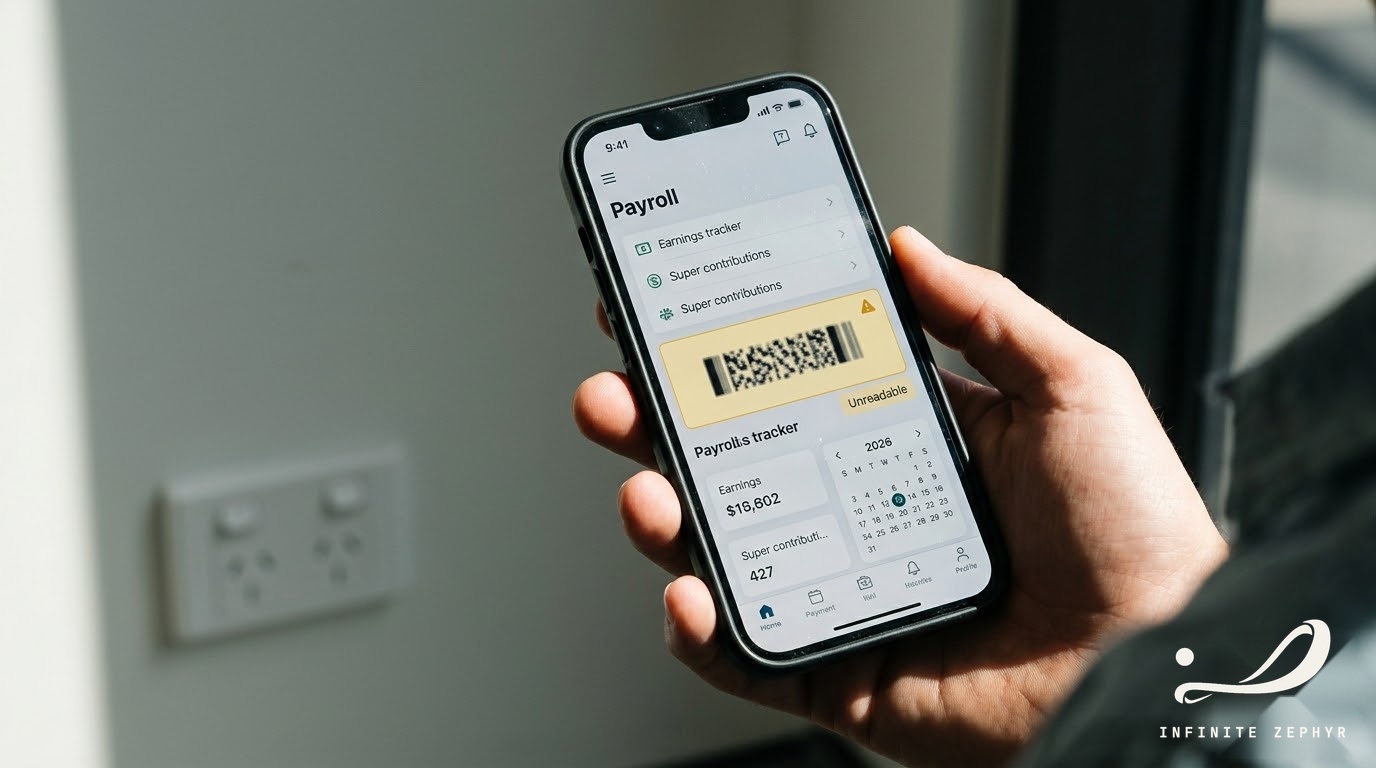
When Must Super Reach the Fund, and What Proves Receipt?
The Australian Taxation Office requires your contributions from 1 July 2026 to reach the employee’s fund within seven business days after payday, with sufficient allocation information, unless an exception applies. Your payment approval, a bank debit and an STP submission record different stages. None substitutes for checking fund receipt and the information needed to match the contribution.
The following workflow assigns suggested business roles. Smaller businesses may combine roles, but each stage still needs an accountable person.
| Stage and suggested owner | Evidence to retain | Check |
|---|---|---|
| Payroll preparer calculates the pay run | Earnings calculation and STP record | Qualifying earnings and super guarantee liability agree |
| Authorised approver approves payment | Approval record | Approved amount matches the pay run |
| Payment operator sends payment | Bank debit confirmation | Amount sent matches the approval |
| Payroll reconciler checks receipt | Fund receipt record and allocation information | Receipt meets the applicable deadline |
| Payment operator investigates rejection | Rejection message and correction record | Unresolved items have an owner |
| Payroll reconciler matches liabilities | Liability-to-receipt match and exception log | Missing or duplicate matches are identified |
Your new employees can qualify for a deadline exception. Whether an exception applies determines the relevant deadline; the standard timetable cannot be extended without checking.
SuperStream changes from 1 July 2026 support near real-time payments through the New Payments Platform, improved error messages and member verification requests. These features do not make your payment initiation proof of timely fund receipt. You can check which functions your payment provider supports.
What Happens If Super Is Late or Rejected?
Late fund receipt can trigger the super guarantee charge, or SGC: the charge associated with failing to meet employer super guarantee obligations. Under the Australian Taxation Office’s rules from 1 July 2026, SGC is assessed using qualifying earnings. If your payment is rejected, the relevant checks are receipt evidence and the applicable deadline, rather than an assumption that the original transfer completed your obligation.
Ordinary super guarantee and SGC are different amounts. From 1 July 2026, SGC includes interest compounded daily at the general interest charge rate and an administrative uplift reflecting enforcement costs. The uplift can be reduced where the ATO has not taken action previously and you lodge a voluntary disclosure statement.
SGC was not tax deductible under the former quarterly rules but is deductible from 1 July 2026. Deductibility does not remove the charge or your underlying payment failure.
For a late, rejected or unallocated contribution, your payment record, rejection message and fund evidence provide the records for assessing the correction or voluntary disclosure pathway.

How Does Payday Super Affect Business Cash Flow?
Payday Super can bring your cash outflows forward if you previously paid quarterly. The Australian Taxation Office’s general super guarantee rate remains 12% from 1 July 2026, but a different earnings base can also affect your calculation. Where earnings and contribution assumptions stay the same, the cash-flow difference is timing rather than an automatic increase in total super guarantee.
A cash-timing and transition example
Illustrative example (hypothetical, not a real client): A business owner is also an eligible employee outside Norfolk Island. Their wages are $5,000 per payday. Assume the same wages qualify as ordinary time earnings under the former rules and qualifying earnings under Payday Super, with no other pay components or maximum contribution base adjustment.
Across three illustrative paydays:
- Wages: $5,000 + $5,000 + $5,000 = $15,000.
- Super guarantee per payday: $5,000 × the 12% general rate applying from 1 July 2026 = $600.
- Total super guarantee: $600 + $600 + $600 = $1,800.
Under the former quarterly arrangement, an employer choosing quarterly payment could retain the $1,800 until arranging payment early enough for timely fund receipt. Under the former timetable, the deadline for the quarter ending 30 June 2026 was 28 July 2026.
From 1 July 2026, each equivalent $600 contribution generally has to reach the fund within seven business days after its payday, with sufficient allocation information. Total super guarantee across the three illustrative paydays remains $1,800.
For transition matching, suppose there are two separate obligations: a $1,800 final-quarter liability and a $600 first-payday liability. Together, these obligations total $1,800 + $600 = $2,400. Matching a $1,800 receipt to the final quarter leaves $2,400 − $1,800 = $600 to match to the payday obligation. That receipt alone does not prove both obligations were paid.
This example isolates cash timing and payment matching. It is not a projection, complete liability assessment or personal advice.
Not sure how this applies to you?
Start with a free Financial Health Check™ — a simple way to see where you stand before any advice is given.
For the transition review, you can check liabilities through 30 June 2026 separately from those arising from 1 July 2026, matching each against receipts for missing or duplicate matches.
What Should NSW Employers Check About Payroll Tax?
NSW payroll tax reconciliation is separate from your federal super guarantee calculations. Revenue NSW’s annual return guidance includes employer superannuation among payroll tax wage components, alongside salaries, bonuses and other categories. Your qualifying earnings report therefore cannot be assumed to contain everything needed for the state return.
If your business is registered for NSW payroll tax, you lodge an annual return covering the financial year, including June. There is no separate June return or separate June payment for monthly payers. Your June wage components and tax belong in the annual return.
A practical reconciliation file brings together:
- Employer superannuation and other payroll tax wage-component records.
- June amounts included in the annual return.
- Interstate wage declarations, where employees work across states.
- Required group wage information and identifiers, where grouping applies.
These records serve a different purpose from your payday super guarantee receipt check. You can compare the federal and state reports by their definitions rather than expecting matching totals.

What Checks Matter Before Relying on a Standard Example?
A straightforward super guarantee calculation may not cover your new-employee exceptions, high-income contribution arrangements, interstate wages or unresolved payments. The Australian Taxation Office’s standard receipt rule from 1 July 2026 has exceptions, while Revenue NSW requires additional information for some employers. Those situations call for checking your relevant records and rules before drawing a conclusion from a simple example.
You can use this operational checklist:
- Earnings: Your pay codes reflect qualifying earnings, and STP includes both earnings and super liability.
- Receipts: Your records include fund receipt, allocation and rejection evidence for each payday, with unresolved exceptions assigned to someone.
- Transition: Your final quarterly liabilities are matched separately from payday liabilities.
- High-income owners: Your records track annual qualifying earnings and contributions, with salary sacrifice identified separately from employer super guarantee.
- Payment arrangements: Your replacement for SBSCH supports the required SuperStream contribution process.
| Issue | Action | Evidence |
|---|---|---|
| Pay-code treatment is unclear | Check pay codes against qualifying earnings and reconcile earnings and super liability with STP | Earnings calculation, pay-code records and STP record |
| Payment is rejected or unallocated | Assign an owner and investigate; correction treatment requires case-specific assessment | Payment record, rejection message, correction record and fund evidence |
| Fund receipt is missing or unmatched | Match each liability to fund receipt and allocation information; exception deadlines require case-specific assessment | Fund receipt record, allocation information, liability-to-receipt match and exception log |
The Payday Super resources include a Super Product Register. It is not a complete list of available products. The first-year resource outlines the ATO’s compliance approach for the first year of Payday Super.
When personal advice matters
A standard example may not cover:
- New employees whose contributions may qualify for a deadline exception.
- High-income owners whose annual earnings, salary sacrifice contributions and personal contribution-cap treatment require separate consideration.
- Employers with interstate wages or payroll tax grouping requirements.
- Employers with late, rejected or unallocated contributions that require investigation.
Your personal contribution-cap treatment can require advice beyond an employer earnings calculation. At Infinite Zephyr, the scope of superannuation advice is distinct from running payroll; how we price our work explains the fee approach.
A practical next step is to assemble your latest payroll calculation, contribution records and unresolved-payment log for review by the relevant payroll, accounting or financial advice professional.
Tax laws are complex and subject to change. This information is a general summary only and should not be relied upon as formal tax advice.
Frequently Asked Questions
Does Payday Super change who receives employer super?
No. The Australian Taxation Office says your eligibility is unchanged from 1 July 2026, including coverage for eligible contractors paid mainly for their labour. The reform changes payment timing and related calculation and reporting rules.
How quickly does a fund allocate or return contributions?
From 1 July 2026, your fund has three business days to allocate or return contributions, excluding the receipt day. That processing period is separate from your employer’s payment deadline.
Do employers have to replace every payment platform?
No. You can continue using existing systems and platforms from 1 July 2026, except SBSCH. Your existing arrangement still needs checking against the new receipt and data requirements.
Can employers check fund details before sending contributions?
Yes. SuperStream changes from 1 July 2026 include a member verification request to check whether a fund can match and accept your employee’s contribution. Availability is a point you can confirm with your payment provider.
Can changing fund details affect contributions?
Yes. Fund Validation Service improvements from 1 July 2026 provide earlier notice of key changes to large super funds’ details, including fund mergers. Your payment records need to reflect the relevant fund details.
Next step
Talk through your retirement plan
We can model how the rules in this guide apply to your situation, across super, investments and your other assets.
Start with a free Financial Health Check™
General information only. Personal advice requires an agreed scope and may need a Statement of Advice (SOA) or Record of Advice (ROA). Fees are agreed in writing before you start.
Sources: Australian Taxation Office — About Payday Super; Super guarantee rates and thresholds; Payday Super resources. Revenue NSW — Annual payroll tax return.
Tax, superannuation, and regulatory information in this article is based on legislation and ATO/ASIC guidance current as of 2026. These rules are complex and subject to change, and this article is not updated retrospectively when they do. This information is a general summary only and should not be relied upon as formal tax advice — always confirm current rules with a registered tax agent or the ATO directly.
General Advice Warning: This information is general in nature only and does not constitute personal financial, legal, or tax advice. It has been prepared without taking into account your individual objectives, financial situation, or needs. Before acting on any information, you should consider its appropriateness having regard to your objectives, financial situation, and needs, and seek professional advice from a licensed financial adviser and registered tax agent. Past performance is not a reliable indicator of future performance.
This information is provided by Infinite Zephyr, an Authorised Representative (AR 001268024) of NDT Capital Pty Ltd (AFSL 558899). You can verify this authorisation on the ASIC Financial Advisers Register. For dispute resolution, contact the Australian Financial Complaints Authority (AFCA).