Truck finance lets a business pay for a truck over time instead of paying the full price upfront. The common structures are a chattel mortgage, hire purchase and leasing, and they differ on who owns the truck, what you pay each period and what is left to pay at the end. For trucks, two ATO rules matter early: the car limit only applies to passenger vehicles carrying a load of less than one tonne, and the $20,000 instant asset write-off threshold is tested against the full cost of each asset.
This guide sits under our equipment finance guide, which covers machinery and other business assets. Here the focus is on the questions that are specific to trucks: payload, GST on commercial vehicles, balloon payments and cash flow when work slows.
Key takeaways
- Business.gov.au explains that with a chattel mortgage the business owns the asset from the start, and a balloon can lower the regular payments.
- With hire purchase, ownership passes to you after the final payment.
- The ATO car limit ($69,883 for 2026–27) does not apply to vehicles that are not passenger vehicles, which can include trucks with a payload of one tonne or more.
- A truck costing $20,000 or more cannot use the instant asset write-off; it goes into the small business pool instead.
What Is Truck Finance and How Does It Work?
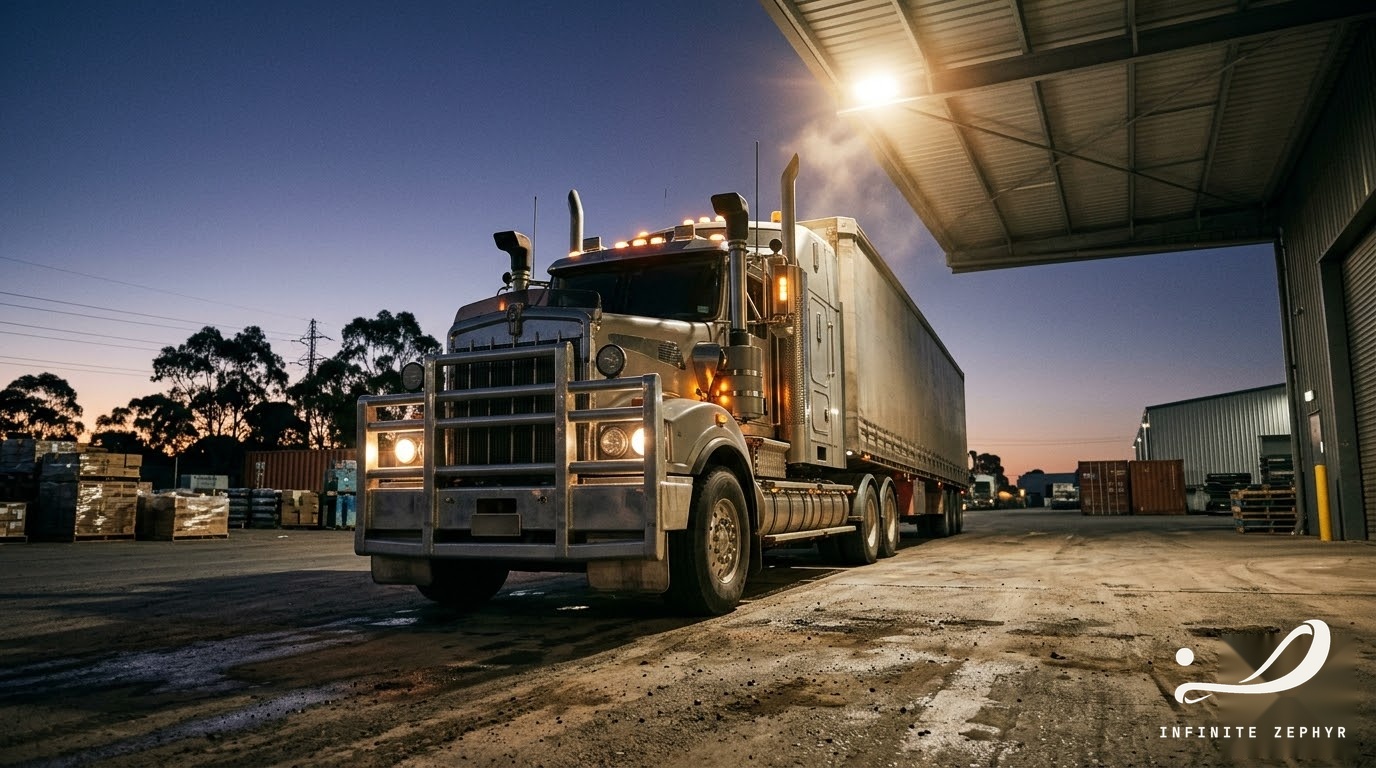
Truck finance is a commercial arrangement where a lender or financier funds a truck and your business repays it over an agreed term. The contract sets the repayments, any fees, any final balloon and the lender’s rights over the truck if repayments stop.
Business.gov.au’s key financial terms describe the main structures:
| Structure | Who owns the truck | Payments and end of term |
|---|---|---|
| Chattel mortgage | Your business owns it from the start | Regular payments; a balloon can reduce them but leaves a lump sum at the end |
| Hire purchase | You own it after the final payment | Deposit, then instalments plus interest |
| Rent to buy | You choose at the end whether to buy | Deposit, then lease payments; at the end you can buy or keep leasing |
| Lease (finance or operating) | Check the contract | Lease payments; ask about any residual and return conditions |
With most of these, the truck is security for the debt. Business.gov.au defines security as property a lender can take ownership of when a loan is not repaid. Owning the truck from day one under a chattel mortgage does not change that.
How Much Does Truck Finance Really Cost?
The regular repayment is only part of the cost. Moneysmart’s car loan guide lists establishment fees, broker fees, dealer or introducer fees, monthly service fees and missed-payment fees as charges that can apply to vehicle finance. It is written for personal car loans, so use it as a checklist and confirm which charges your truck contract actually includes.
A balloon lowers each repayment, but Moneysmart notes that the total cost of the loan is generally higher, because the balloon amount still attracts interest until it is paid.
To compare two quotes fairly, put them side by side using the same truck price, term and payment frequency:
| What to record | Quote A | Quote B |
|---|---|---|
| Deposit or upfront payment | ||
| Regular repayment × number of payments | ||
| Balloon or final payment | ||
| Fees (once each) | ||
| Total you will pay under the contract | ||
| Running costs, separately: registration, insurance, fuel, tyres, servicing |
Keep tax out of this table. Any deduction or GST credit is a separate calculation, and it does not reduce what you owe the financier.
Which Tax Rules Apply to Trucks?
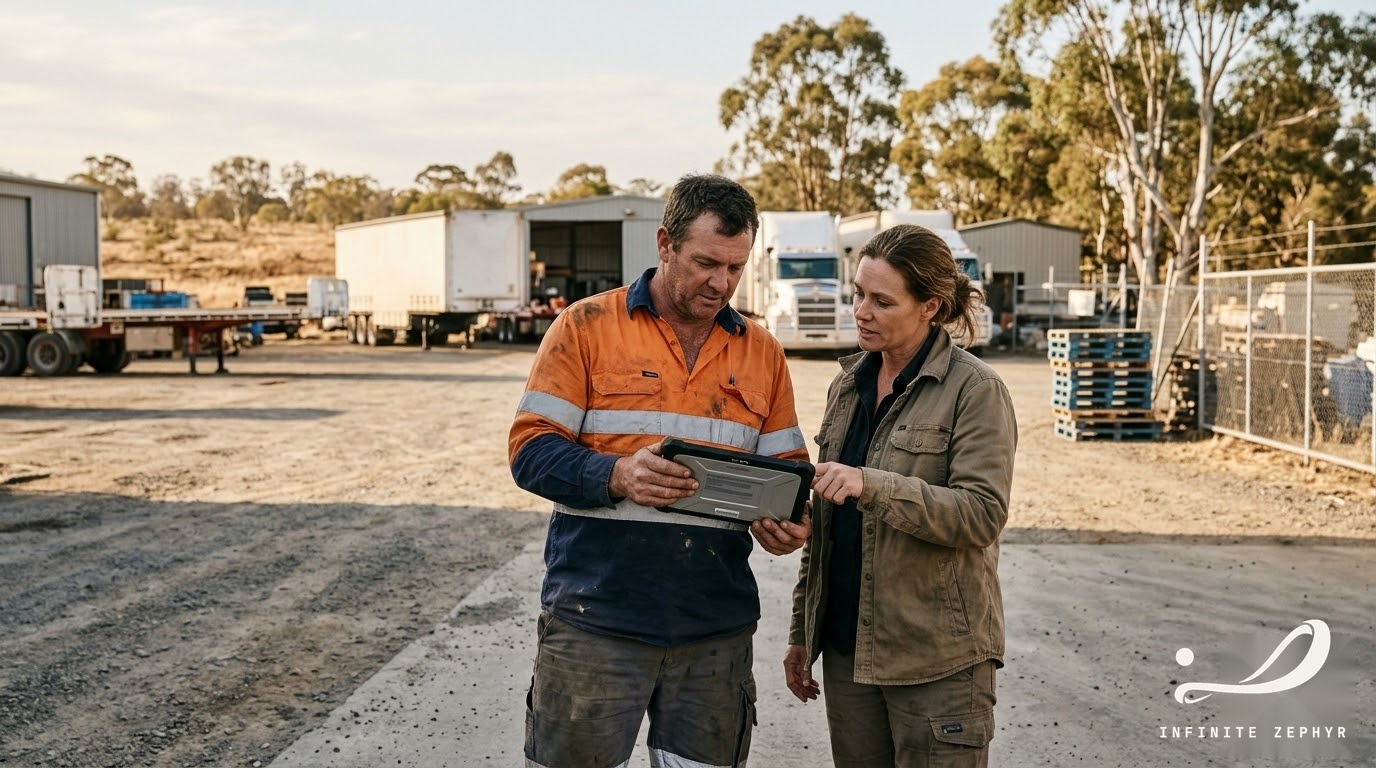
Tax is where trucks differ most from cars. These checks come from the ATO’s instant asset write-off guidance and its guidance on purchasing a motor vehicle.
Payload and the car limit. The car limit applies to passenger vehicles designed to carry fewer than 9 passengers and a load of less than one tonne. It does not apply to vehicles that are not passenger vehicles. Payload is the gross vehicle mass (GVM) on the compliance plate minus the basic kerb weight, so check both figures before you assume a limit applies.
GST credits. If you are registered for GST, hold a tax invoice and use the truck only for business, you can generally claim the GST in the price. With mixed use, the credit is limited to the business-use share. A commercial vehicle that is not designed mainly to carry passengers is one of the exceptions to the car-limit cap on GST credits.
Instant asset write-off. Businesses with aggregated turnover under $10 million that use the simplified depreciation rules can immediately deduct assets costing less than $20,000 each. The government has made the $20,000 limit permanent. Most trucks cost more than that, and the test uses the full cost, not your business-use portion.
Illustrative example (hypothetical, not a real client): A GST-registered courier business buys a light truck for $88,000 including GST, with a payload above one tonne, and uses it 100% for business. It holds a tax invoice and its turnover is under $10 million.
GST credit: $88,000 × 1/11 = $8,000. The car limit cap does not apply, because the truck is not a passenger vehicle.
Instant asset write-off: $88,000 is above $20,000, so the truck goes into the small business pool and is depreciated over time instead of being deducted at once.
What did not change: the business still owes the full repayments and any balloon under its finance contract.
Not sure how this applies to you?
Start with a free Financial Health Check™ — a simple way to see where you stand before any advice is given.
Buying second-hand privately. If the seller is not registered for GST and you are not buying for resale, there is no GST credit to claim. The instant asset write-off can still apply to second-hand assets if the other conditions are met.
Tax laws are complex and subject to change. This information is a general summary only and should not be relied upon as formal tax advice.
What Documents Do Lenders Usually Ask For?
Every lender sets its own criteria, so ask for its list before you apply. Gathering these in advance makes quotes easier to compare:
- Business details: ABN, entity type and how long you have traded.
- Recent financial statements, BAS lodgements or business bank statements.
- A list of existing loans, leases and other repayments.
- The truck details: dealer quote or private sale contract, make, model, year, GVM and kerb weight.
- For a private purchase: proof the seller owns the truck and there is no money owing on it.
- Any contracts or work that the truck will be used for.
Also ask whether the lender wants a personal guarantee from directors, and what it would mean for you if the business could not pay.
Can the Business Carry the Repayments When Work Slows?
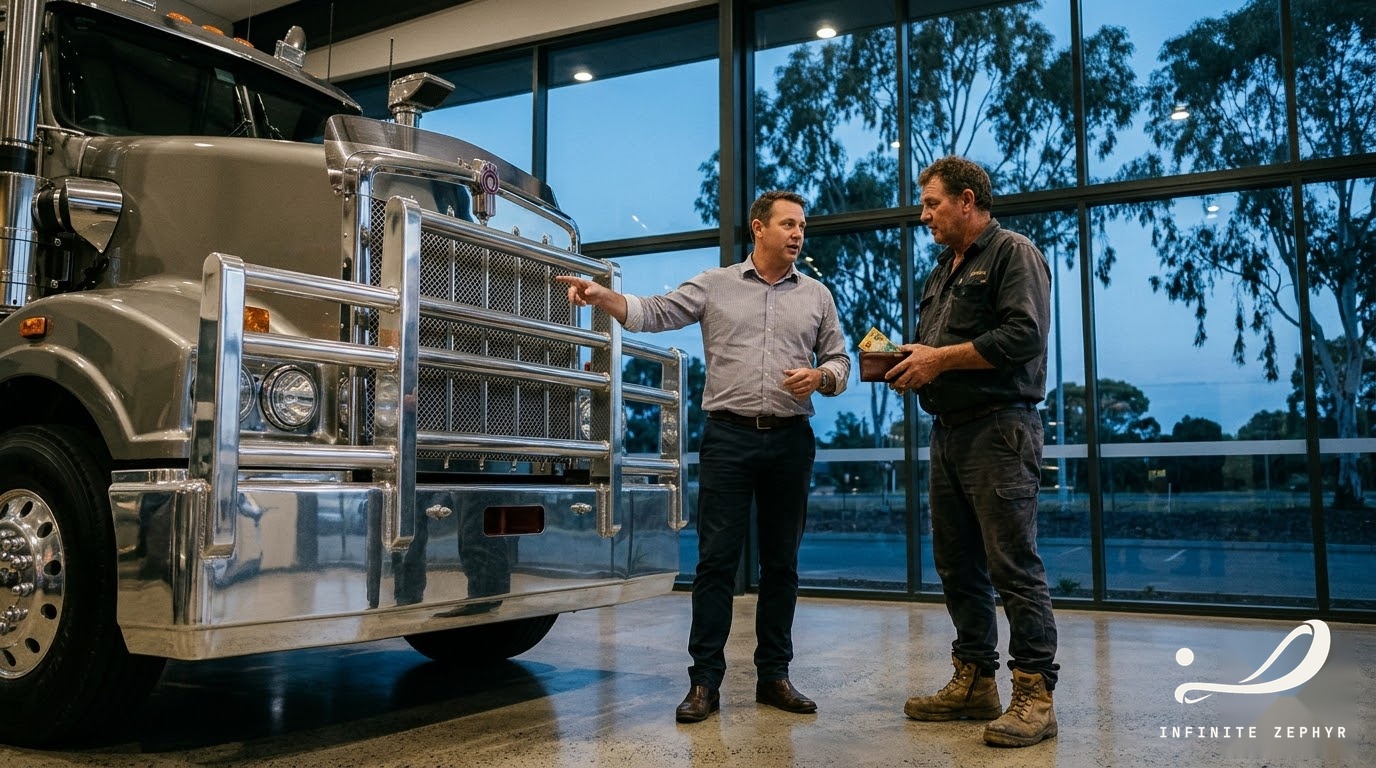
Freight and trade work can be uneven, so test the repayments against a quiet month, not an average one. Moneysmart advises checking whether you could still afford repayments if your circumstances change. It also warns that the sale price of a vehicle may not cover the remaining loan, so you could still owe money after selling.
| Question | What to work out |
|---|---|
| What must be paid in a slow month? | Repayments and ongoing fees |
| What does it cost to keep the truck on the road? | Registration, insurance, fuel, tyres, servicing |
| What is due at the end? | Any balloon or final payment, and where the money will come from |
| What if you sell early? | Payout figure compared with a realistic sale price |
When an arrangement may not suit
A large balloon may not suit a business that has no clear way to fund the final lump sum. If losing the truck would stop the business trading, look closely at the security and default terms before signing. And because commercial loans have fewer legal protections than consumer loans, check whether the financier is a member of AFCA, the external complaints body.
If you are financing a passenger vehicle as well, our business car loan guide covers the car limit and how GST works on leases.
Frequently Asked Questions
Is a chattel mortgage the same as hire purchase?
No. Business.gov.au explains that with a chattel mortgage the business owns the asset from the start, while with hire purchase you own it only after the final payment.
Does the car limit apply to a ute or light truck?
It depends on the vehicle. As set out above, the car limit only covers passenger vehicles under the passenger and one-tonne load thresholds, so check the payload, which is the GVM minus the kerb weight.
Can I claim GST on lease payments for a truck?
The ATO says that when you lease a vehicle, you may be able to claim the GST in each lease payment based on business use, and this credit is not limited to one-eleventh of the car limit.
Does the instant asset write-off reduce my repayments?
No. A deduction changes your tax position, not your finance contract. Your repayments and any balloon stay the same.
What does a broker fee cover?
Moneysmart describes a broker fee as a one-off fee for arranging finance, and it must be disclosed in the finance contract. Ask what the broker is paid and by whom.
If you want help working through the numbers before you speak to a lender, see how we work with business owners and our pricing. You can also find more about Infinite Zephyr on our homepage.
Next step
Getting ready to finance a truck?
We can help you prepare your documents and compare finance structures before you speak with a lender.
Start with a free Financial Health Check™
General information only. Personal advice requires an agreed scope and may need a Statement of Advice (SOA) or Record of Advice (ROA). Fees are agreed in writing before you start.
Sources: Business.gov.au, key financial terms; Moneysmart, car loans; ATO, instant asset write-off and purchasing a motor vehicle; ASIC, disputes about commercial loans.
General information only. This article is general in nature and is not personal financial, credit, legal or tax advice. It doesn’t take into account your objectives, financial situation or needs, so consider whether it suits you and get advice from a licensed adviser and a registered tax agent before acting. Rules on tax, super and lending change. This article reflects legislation and ATO/ASIC guidance current as of 2026 and isn’t updated retrospectively, so confirm current rules with a registered tax agent or the ATO. Past performance is not a reliable indicator of future performance.
Infinite Zephyr is an Authorised Representative (AR 001268024) of NDT Capital Pty Ltd (AFSL 558899). Dean Nguyen is a Credit Representative (CRN 513835) of Outsource Financial Pty Ltd (ACL 384324). Verify us on the ASIC Financial Advisers Register. For complaints, contact AFCA.